Buying Guide
Solar Panel Price in Bangladesh 2026: Complete Buying Guide
2026-10-15 · 11 min read · By POD Shop
Quick Answer: Solar Panel Price in Bangladesh
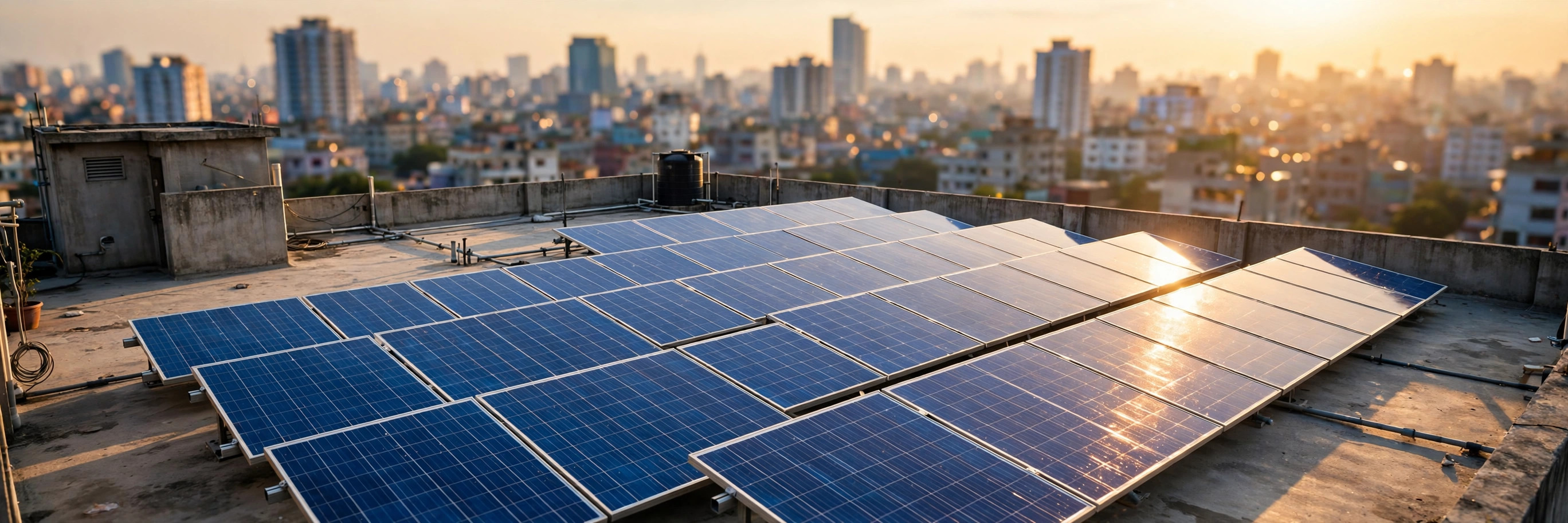
The solar panel price in Bangladesh in 2026 starts at around ৳5,000–6,500 for a basic 100W polycrystalline panel. The most popular size for homes — a 150W monocrystalline panel — typically costs ৳7,000–9,500, 200W–250W panels run ৳10,000–16,000, and large 400W–550W panels cost ৳22,000–45,000+. For a typical family, one 150W panel with a battery and charge controller runs 3–4 LED lights, a DC fan and phone charging straight through load-shedding. Our Solar Panel 150W Mono (৳8,500) sits right in the value sweet spot with high-efficiency mono cells — and our Solar Home System Kit (৳12,500) bundles panel, battery, controller and lights in one box.
Solar is no longer a luxury in Bangladesh — it is a practical answer to load-shedding, rising electricity bills and the cost of running a generator. Villages outside the national grid have used solar home systems for over a decade, and now even grid-connected homes in Dhaka, Chattogram and Sylhet are adding rooftop panels to cut bills and keep fans running when the power goes out. This guide breaks down the solar panel price in Bangladesh, the types available, what a complete setup really costs, and exactly how to choose the right panel.
Types of Solar Panels Available in Bangladesh
Almost every panel sold in Bangladesh falls into two families. Knowing the difference is the single most important buying decision you will make:
- Monocrystalline (mono): Made from single-crystal silicon. Dark black cells, 19–22% efficiency, better performance in low light and high heat. Costs 10–20% more than poly but produces more power from the same roof space. The best choice for most buyers in 2026.
- Polycrystalline (poly): Made from multiple silicon fragments melted together. Blue-ish cells, 15–17% efficiency, slightly cheaper. Fine for large open spaces where roof area is not a constraint, but mono has largely taken over the market.
- Thin-film: Rare in the Bangladeshi retail market. Lower efficiency, mostly used in specialised commercial projects — you can ignore this category as a home buyer.
Within mono panels you will also see terms like "half-cell" and "PERC". Half-cell panels split each cell in two, which reduces energy loss and improves shade tolerance — worth a small premium if part of your roof gets shade during the day. PERC is a cell technology that squeezes a few extra percent of efficiency out of the same sunlight; most quality 150W+ mono panels sold today use it.
Solar Panel Price in Bangladesh 2026: Full Price List
Here is what the solar panel price in Bangladesh looks like across common sizes in 2026. These are typical market prices for genuine panels with proper labelling — suspiciously cheap panels are often mislabelled on wattage:
| Panel Type | Typical Specs | Price (BDT) | Best For |
|---|---|---|---|
| 100W Poly | 12V, ~15–16% efficiency | ৳5,000 – ৳6,500 | 2–3 lights + phone charging |
| 150W Mono | 12V, ~19–21% efficiency | ৳7,000 – ৳9,500 | Fan + 4 lights + TV — most popular |
| 200W Mono | 12V/24V, half-cell | ৳10,000 – ৳13,000 | Multiple fans, medium homes |
| 250W Mono | 24V, half-cell PERC | ৳13,000 – ৳16,000 | Larger homes, small shops |
| 400W Mono | 24V, half-cell PERC | ৳22,000 – ৳30,000 | Shops, offices, pumps |
| 550W Mono | 24V, half-cell PERC | ৳32,000 – ৳45,000 | Commercial, net-metering projects |
Our Solar Panel 150W Mono at ৳8,500 is priced competitively against the typical market range above, and you get a genuine product with proper after-sales support instead of a grey-market panel of uncertain wattage.
What Determines Solar Panel Price in Bangladesh?
Five factors move the price more than anything else:
- Wattage: The biggest driver. Price scales roughly linearly with watts — a 200W panel costs about twice a 100W one. Do not pay for watts you cannot use; size the panel to your actual loads.
- Cell type: Mono costs 10–20% more than poly at the same wattage, but delivers more energy per square foot and degrades slower. Over a 20-year life, mono usually wins on total value.
- Efficiency: A 21%-efficient 150W panel is physically smaller than an 18%-efficient one. If roof space is tight, efficiency is worth paying for.
- Brand and certification: Panels with IEC certification and a verifiable brand name cost more than unbranded imports — and are far less likely to be 100W panels relabelled as 150W.
- Import costs: Bangladesh imports nearly all panels, so dollar rates and import duties feed directly into retail prices. Prices tend to be most stable mid-year and can spike around high-demand summer months.
Price Tiers: Budget, Mid-Range and Premium
| Tier | Budget (BDT) | What You Get | Best For |
|---|---|---|---|
| Budget | ৳5,000 – ৳8,000 | 100W poly panel, basic frame, panel only | Lighting + phone charging in one room |
| Mid-range | ৳8,000 – ৳16,000 | 150–250W mono panel, better efficiency and build | Most homes — the value zone |
| Premium | ৳22,000 – ৳45,000+ | 400W+ half-cell PERC panels, top efficiency | Shops, offices, large homes |
Remember the panel is only part of the system. A complete solar home setup also needs a charge controller, battery, wiring and mounting — budget roughly the same amount again for these. That is why bundled options like our Solar Home System Kit (৳12,500) are popular: panel, battery, controller and LED lights in one matched package, with no compatibility guessing.
How to Choose the Right Solar Panel: 7-Point Checklist
1. Size the wattage to your real loads
Add up what you want to run. A DC table fan draws ~15W, an LED bulb ~7W, phone charging ~10W. Fan + 4 bulbs + phone = roughly 60W running load — a 150W panel comfortably covers this with margin for cloudy hours. Oversizing by 30–50% above your load is smart; oversizing by 300% is wasted money.
2. Choose mono over poly in 2026
Unless you have unlimited free roof space, monocrystalline is the better buy. Higher efficiency means more power per square foot, better low-light morning/evening output, and slower degradation — typically 0.5% per year versus ~0.8% for poly.
3. Check the efficiency rating on the label
Look for 19%+ on mono panels. If a seller cannot tell you the efficiency, or the label looks photocopied, walk away. Genuine panels carry a datasheet with wattage, voltage (Voc, Vmp), current and efficiency.
4. Match the voltage to your system
Small home systems run on 12V: panel, controller and battery must all be 12V. Larger 24V panels (250W+) need a 24V battery bank or an MPPT controller that can step voltage down. Mixing voltages without understanding them is the most common DIY mistake.
5. Budget for the charge controller
Never connect a panel directly to a battery — you need a charge controller in between. A PWM controller (৳1,200–2,500 typical market price) is fine for small 12V systems; an MPPT controller (৳4,000–8,000) harvests 15–30% more energy and is worth it for 200W+ setups.
6. Pair with the right battery
Solar panels charge batteries; batteries run your loads at night. A 100Ah battery (৳14,000–18,000 typical market price) pairs well with a 150W panel for lights and a fan. For longer backup, go 130–200Ah. Deep-cycle solar batteries last far longer than car batteries in this role — do not substitute.
7. Buy genuine, with warranty
Look for at least a 5-year product warranty and a 20–25 year performance warranty on the panel. Buy from a shop that will still be around to honour it — every solar product at POD Shop is quality-checked and backed by proper after-sales support, with cash on delivery across Bangladesh.
Complete Solar Setup Costs in Bangladesh
Beyond the solar panel price in Bangladesh, here is what the rest of a typical 150W home system costs at market rates:
| Component | Typical Market Price (BDT) | Notes |
|---|---|---|
| 150W mono panel | ৳7,000 – ৳9,500 | Ours: ৳8,500 |
| Charge controller (PWM 20A) | ৳1,200 – ৳2,500 | MPPT costs more, harvests more |
| 100Ah deep-cycle battery | ৳14,000 – ৳18,000 | The priciest single component |
| Wiring, MC4 connectors, mounting | ৳1,500 – ৳3,000 | Do not skimp on wire gauge |
| DC fan + 4 LED bulbs | ৳2,000 – ৳3,500 | Efficient DC loads stretch backup |
A full DIY 150W system therefore lands around ৳26,000–37,000. Compare that with our ready Solar Home System Kit at ৳12,500 — a smaller matched system ideal for 2–3 lights and phone charging — or add our Solar Street Light (৳3,500) for automatic dusk-to-dawn courtyard or gate lighting with zero wiring.
Installation, Maintenance and Tips for Bangladesh
- Angle and direction: Face panels true south, tilted about 23 degrees (Bangladesh's latitude). A wrong angle can cost you 10–15% of output.
- Dust is the silent killer: Dhaka's dust can cut output 10–20% in a few weeks. Wipe panels with a soft damp cloth every 2–3 weeks — early morning is best.
- Monsoon care: Panels are waterproof, but check mounting bolts before storm season and make sure water drains off rather than pooling on the frame.
- Shade matters more than you think: Even partial shade on one corner can disproportionately cut a panel's output. Survey your roof at 9am, noon and 3pm before mounting.
- Keep batteries ventilated: Lead-acid batteries release gas while charging — never seal them in an airtight box indoors.
- Net metering: If you are planning a large grid-tied system, distribution companies (DPDC, DESCO, NESCO, BREB areas) have net-metering policies — check current rules with your local office before investing.
Conclusion: Is Solar Worth It in Bangladesh?
For most households, yes — especially where load-shedding is frequent. A 150W system pays for itself in 2–3 years compared to running a generator or simply in the value of uninterrupted light and fans. Start with a quality panel, size the battery honestly, and buy from a seller who supports what they sell. Browse solar panels and solar home systems at POD Shop — genuine products, clear pricing in BDT, cash on delivery, and delivery to all 64 districts. Pair your setup with a battery backup (IPS) for the ultimate load-shedding-proof home, or add efficient DC fans to stretch every watt further.
Shop Featured Products
View all →


Frequently Asked Questions
How much does a 150W solar panel cost in Bangladesh?+
A genuine 150W monocrystalline solar panel costs ৳7,000–9,500 in Bangladesh in 2026. Beware of panels priced far below this range — they are often lower-wattage panels with fake labels. POD Shop sells a genuine Solar Panel 150W Mono for ৳8,500.
Which is better for Bangladesh: mono or poly solar panel?+
Monocrystalline is the better choice for most buyers in 2026. It is 19–22% efficient versus 15–17% for poly, performs better in low light and heat, degrades slower, and the price gap has narrowed to just 10–20%. Choose poly only if you have abundant free space and a very tight budget.
How many solar panels do I need to run a ceiling fan and 4 LED lights?+
One 150W panel is enough. A DC ceiling fan draws about 30–35W and four LED bulbs about 28W combined — roughly 65W total. A 150W panel with a 100Ah battery and charge controller comfortably runs this load through the evening and handles phone charging too.
How long do solar panels last in Bangladesh?+
Quality panels carry a 20–25 year performance warranty and degrade about 0.5% per year, so a panel still produces roughly 85–90% of its rated power after 20 years. Heat, dust and poor mounting shorten life — regular cleaning and solid installation matter more than brand hype.
Do solar panels work on cloudy or rainy days in Bangladesh?+
Yes, but at reduced output — typically 10–30% of rated capacity under heavy cloud. Monsoon months (June–September) produce noticeably less energy, which is why sizing your battery for 1–2 days of autonomy matters. Panels still generate some power even in overcast conditions.
What else do I need besides the panel for a solar home system?+
You need a charge controller (between panel and battery), a deep-cycle battery for night-time use, proper DC wiring with MC4 connectors, and mounting hardware. A 150W home system typically costs ৳26,000–37,000 all-in at market rates, or you can buy a matched Solar Home System Kit from POD Shop for ৳12,500.
Reference: Solar panel on Wikipedia