Comparison
Infrared Cooker vs Induction Cooker in Bangladesh 2026: Which is Better?
2026-10-13 · 10 min read · By POD Shop
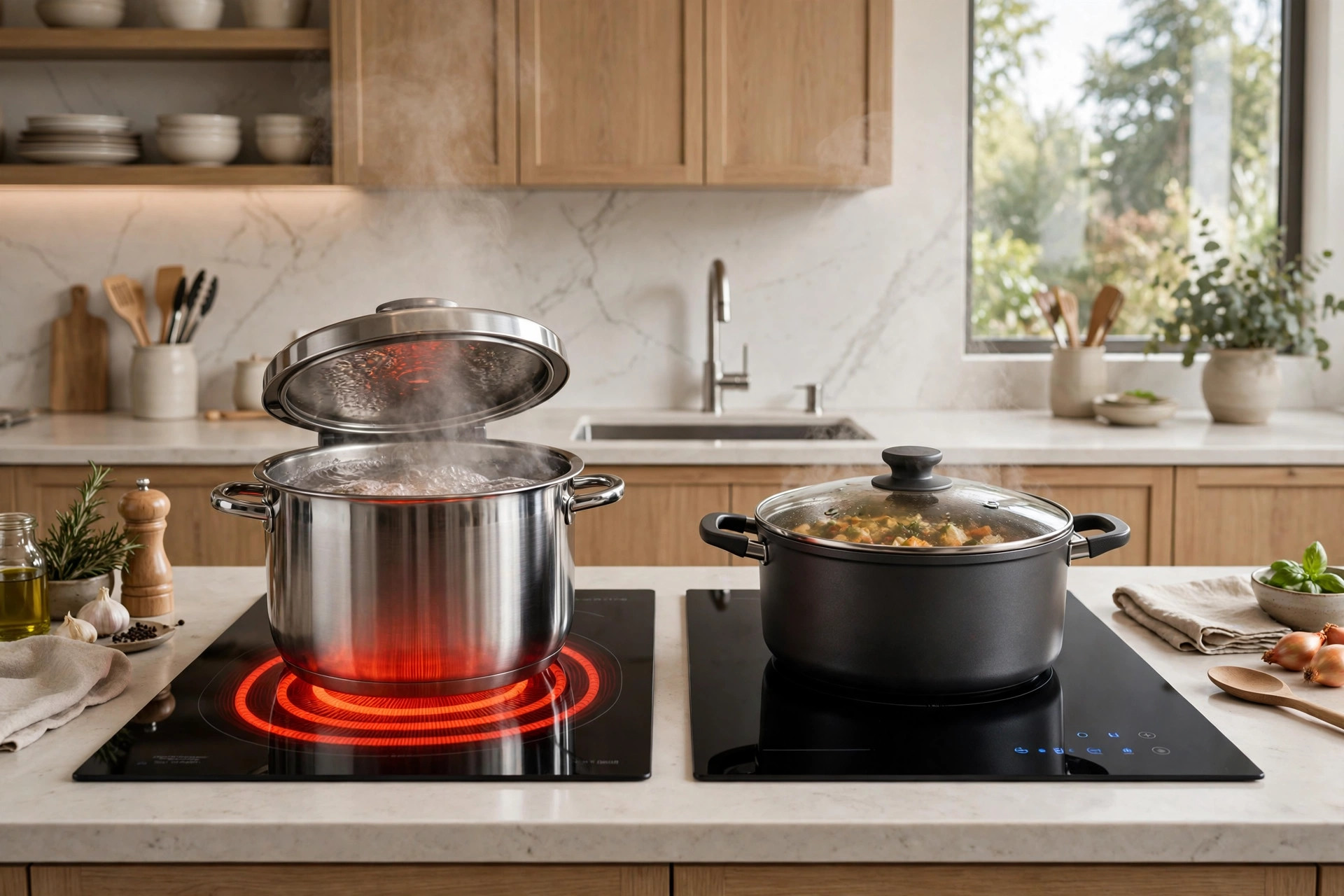
If you are choosing between an infrared cooker and an induction cooker in Bangladesh in 2026, here is the short answer: buy an infrared cooker if you want to keep using your existing hari, korai and aluminium pots — it heats any kind of cookware. Buy an induction cooker if you want the lowest electricity bills and the fastest boiling, and you are willing to cook only with magnetic (iron or stainless steel) utensils. For most Bangladeshi families, infrared is the more practical choice, because our kitchens are full of aluminium and non-magnetic cookware. Induction is roughly 10–15% more energy-efficient, but that saving disappears if you have to buy a whole new set of pots. Infrared cooker price in Bangladesh starts around ৳2,500, while induction cookers generally start around ৳3,500.
In this guide we explain how each technology works, compare them side by side, break down the real electricity cost with Bangladeshi slab rates, and tell you which one handles bhat, dal, machh bhaji and mangsho kosha better. By the end, you will know exactly which cooker belongs in your kitchen.
How an Infrared Cooker Works
An infrared cooker uses a heating element — usually a halogen or radiant coil — hidden under a smooth glass-ceramic top. When you switch it on, the element glows red-hot and radiates infrared heat upward into whatever pot sits on top. Because the heat travels as radiation (like sunlight warming your skin), it does not care what the pot is made of: aluminium, steel, iron, clay, glass — everything gets hot.
This is why infrared cookers feel familiar to anyone who has cooked on a gas stove or an electric hotplate. The cooking experience is almost identical; only the heat source changes. Most infrared cookers sold in Bangladesh come with preset modes (fry, boil, soup, hotpot, BBQ), a timer, child lock and overheat protection, and run on standard 220V household current at 2000–2200W.
How an Induction Cooker Works
An induction cooker works completely differently. Under its glass top sits a copper coil carrying high-frequency alternating current. This creates a magnetic field that induces electric currents directly inside the pot itself — so the pot becomes the heating element. The glass surface stays relatively cool; only the cookware gets hot.
The catch: this only works with ferromagnetic cookware — cast iron, carbon steel, or stainless steel with a magnetic base. Aluminium, copper, glass and clay pots simply will not heat on induction. Many Bangladeshi households discover this the hard way after buying an induction cooker and finding that none of their existing utensils work on it.
Induction is the most energy-efficient electric cooking method (around 85–90% of energy reaches the food), but that efficiency only matters if your cookware is compatible.
Infrared vs Induction: Side-by-Side Comparison
| Feature | Infrared Cooker | Induction Cooker |
|---|---|---|
| Price in Bangladesh (2026) | ৳2,500 – ৳6,000 | ৳3,500 – ৳9,000 |
| Cookware compatibility | All types: aluminium, steel, iron, clay, glass | Only magnetic: iron, magnetic stainless steel |
| Heating speed | Medium (1–2 min to heat up) | Very fast (heats almost instantly) |
| Energy efficiency | ~65–75% | ~85–90% |
| Temperature control | Good, slight lag | Excellent, instant response |
| Surface stays cool | No — surface gets very hot | Mostly yes — safer to touch |
| Works during voltage fluctuation | Yes, tolerates well | Sensitive; needs stable voltage |
| Noise | Silent (small cooling fan) | Cooling fan hum + possible buzzing |
| Best for | Everyday family cooking with existing utensils | Fast boiling, precise simmering, modern kitchens |
Cookware Compatibility: The Deciding Factor
Walk into a typical Bangladeshi kitchen and you will find aluminium hari for bhat, a heavy iron korai for bhaji, maybe a steel patila for dal, and a non-stick cookware set for everyday frying. On an infrared cooker, every single one of these works — you change nothing about how you cook.
On an induction cooker, the aluminium hari and most non-stick pans (unless they have an induction base) are useless. You would need to replace them with induction-compatible pots, which easily adds ৳3,000–৳8,000 to your total cost. Before buying induction, do the magnet test: stick a fridge magnet to the bottom of your pots. If it grips firmly, the pot works on induction. If it slides off, it does not.
Which Bangladeshi Dishes Suit Each Cooker?
- Bhat (rice): Both work well. Induction boils water a little faster; infrared handles the traditional dum (low-flame finish) more naturally.
- Dal and khichuri: Induction's precise low-heat control is excellent for long simmers — but a pressure cooker on either is faster.
- Machh bhaji / dim bhaji: Infrared wins for most families because your seasoned iron korai works as-is.
- Mangsho kosha (slow-cooked meat): Infrared's steady radiant heat mimics a gas flame's kosha beautifully.
- Cha / doodh gorom: Induction is unbeatable for quickly boiling milk or water.
Electricity Cost in Bangladesh: The Real Numbers
Both cookers typically run at 2000–2200W. At full power for one hour, that is about 2 units (kWh) of electricity. Under DPDC/DESCO residential slab rates, higher-slab units cost roughly ৳10–৳14 each (rates change — check your latest bill), so an hour of full-power cooking costs around ৳20–৳28.
In practice, nobody cooks at full power for an hour. A realistic daily session — 20 minutes of frying plus 30 minutes of simmering at medium heat — uses about 1–1.2 units, or roughly ৳12–৳16 per day. Induction's higher efficiency saves maybe ৳2–৳4 per day versus infrared. That is real money over a year (৳700–৳1,500), but it takes 2–3 years to recover the cost of replacing your cookware for induction.
Tip: cookers with multiple preset modes and timers save more electricity than raw wattage differences — you avoid overheating and forgetting the stove on.
Pros and Cons at a Glance
Infrared Cooker: Pros
- Works with all existing cookware — zero replacement cost
- Lower purchase price (starts ৳2,500)
- Familiar cooking feel, like gas or hotplate
- Tolerates voltage fluctuation common in many areas
- Great for slow kosha-style cooking
Infrared Cooker: Cons
- Glass surface gets very hot — burn risk, keep children away
- 10–15% less energy-efficient than induction
- Slower to respond when you turn the heat down
Induction Cooker: Pros
- Highest energy efficiency — lowest running cost
- Fastest heating and most precise control
- Cooler, safer surface
- Easy to wipe clean (spills don't bake on)
Induction Cooker: Cons
- Needs magnetic cookware — big hidden cost for most families
- Higher purchase price
- Sensitive to voltage fluctuation; a stabilizer may be needed
- Some models buzz with lightweight pans
Infrared Cooker Price in Bangladesh 2026
| Type | Typical Price Range | Notes |
|---|---|---|
| Basic infrared cooker (2000W) | ৳2,500 – ৳3,500 | Touch panel, 4–5 presets, timer |
| Mid-range (2200W, more presets) | ৳3,500 – ৳5,000 | Child lock, wider temperature range |
| Premium / branded | ৳5,000 – ৳6,000 | Better build, longer warranty |
| Basic induction cooker | ৳3,500 – ৳5,500 | Needs magnetic cookware |
| Branded induction cooker | ৳5,500 – ৳9,000 | Precise controls, safety sensors |
At POD Shop, infrared cookers from brands like MB International sit in the sweet spot of price and reliability, and every unit is quality-checked before dispatch with cash on delivery available nationwide. If you are also upgrading your pots, check our cookware sets — and read our non-stick cookware buying guide before you choose.
How to Choose the Right Infrared Cooker: Checklist
Not all infrared cookers are built equally. Run through this checklist before you buy:
- Wattage (2000–2200W): 2000W is plenty for family cooking. Higher wattage heats faster but draws more current — make sure your kitchen wiring and socket can handle it.
- Preset cooking modes: Look for at least fry, boil, soup and hotpot modes. More presets mean less guesswork with temperature.
- Timer function: A 1–180 minute timer lets you set dal to simmer and walk away safely.
- Child lock: Essential if you have small children — it locks the touch panel so curious fingers can't change settings.
- Overheat protection: The cooker should shut off automatically if the surface gets dangerously hot or if a pot boils dry.
- Glass quality: A thick, polished glass-ceramic top resists thermal shock and is easier to clean. Avoid units with visibly thin or wavy glass.
- Cooling fan: A quiet built-in fan protects the electronics. After cooking, let the fan run until the surface cools.
- Warranty and service: Buy from a shop that offers at least a 1-year service warranty and genuine after-sales support in Bangladesh.
Safety and Maintenance Tips
- Always place the cooker on a flat, dry, heat-resistant surface with a few inches of clearance around it for ventilation.
- Never leave an infrared cooker unattended at high heat — the surface stays dangerously hot for 10–15 minutes after switching off.
- Use flat-bottomed pots for the best heat transfer; warped bottoms waste electricity.
- Clean the glass top only after it cools completely, with a soft damp cloth. Avoid abrasive scrubbers that scratch the surface.
- Do not pour cold water on a hot glass top — sudden temperature change can crack it.
- Unplug the cooker when not in use, especially during load-shedding comebacks when voltage can spike.
Popular Infrared Cooker Brands in Bangladesh
You don't need an imported luxury brand to get a reliable infrared cooker. Here's what's commonly available:
- MB International: widely available, good balance of price and build quality; popular preset modes suited to local cooking.
- Vision: a household name in Bangladesh; solid after-sales network.
- Miyako: known for multi cookers and small appliances; decent mid-range infrared options.
- Generic/no-name units: cheapest (sometimes under ৳2,500) but risky — thin glass, weak safety cutoffs, no service. Avoid unless the seller offers a real warranty.
Whatever brand you choose, buy from a shop that tests the unit before dispatch and honors the warranty in Bangladesh — that matters more than the logo on the box.
Common Mistakes to Avoid
- Buying induction by accident: boxes look similar. Check the label says "infrared" if you want universal cookware compatibility.
- Using a warped pot: a wobbling bottom wastes up to 30% of energy and heats unevenly. Use flat-bottomed cookware.
- Ignoring the wattage rating of your socket: a 2200W cooker needs a proper 3-pin socket and wiring — not a thin multi-plug shared with a fridge.
- Blocking the cooling fan: placing the cooker on a soft tablecloth or against a wall traps heat and shortens its life.
- Cooking without the timer: the timer is there to save electricity and prevent boil-overs — use it for dal, rice and slow simmers.
Our Verdict: Which Should You Buy?
Choose infrared if: you cook with aluminium/iron/clay utensils, you want the cheapest upgrade from gas, your area has voltage fluctuation, or you cook traditional slow dishes like kosha mangsho.
Choose induction if: you already own (or will buy) magnetic cookware, you want maximum speed and efficiency, you have stable voltage, and safety around children is a top priority.
For roughly 8 out of 10 Bangladeshi households, infrared is the smarter buy in 2026 — it slots into your existing kitchen with zero extra cost, and the per-day electricity difference is small. Induction is the better technology on paper, but only if your kitchen is ready for it.
Shop Featured Products
View all →


Frequently Asked Questions
What is the infrared cooker price in Bangladesh in 2026?+
Infrared cooker price in Bangladesh in 2026 ranges from ৳2,500 for basic 2000W models to ৳6,000 for premium branded units. Mid-range models with more presets, child lock and timers cost ৳3,500–৳5,000.
Can I use my aluminium hari on an infrared cooker?+
Yes. Infrared cookers heat all cookware types — aluminium, stainless steel, cast iron, clay and glass. This is their biggest advantage over induction cookers, which only work with magnetic pots.
Which is cheaper to run: infrared or induction cooker?+
Induction is about 10–15% more energy-efficient, saving roughly ৳2–৳4 per day in typical home use. However, if you must buy new induction-compatible cookware (৳3,000–৳8,000), it takes 2–3 years for the savings to pay back that cost.
Is an infrared cooker safe?+
Yes, when used properly. It has overheat protection and child lock, but the glass surface gets very hot during and after cooking, so keep children away and never touch the surface until it cools. Always place it on a flat, heat-resistant surface.
Does an infrared cooker work during voltage fluctuation?+
Infrared cookers tolerate voltage fluctuation better than induction cookers, which have sensitive electronics. In areas with unstable power, infrared is the more reliable choice.
Can I cook bhat and khichuri on an infrared cooker?+
Absolutely. Rice, khichuri, dal, bhaji and slow-cooked meat all cook well on infrared. For dal and khichuri, many families prefer using a pressure cooker on the infrared cooker to save time and electricity.
Reference: Induction cooking on Wikipedia