Buying Guide
Non-Stick Cookware Set Price in Bangladesh 2026: What to Look For
2026-10-13 · 10 min read · By POD Shop
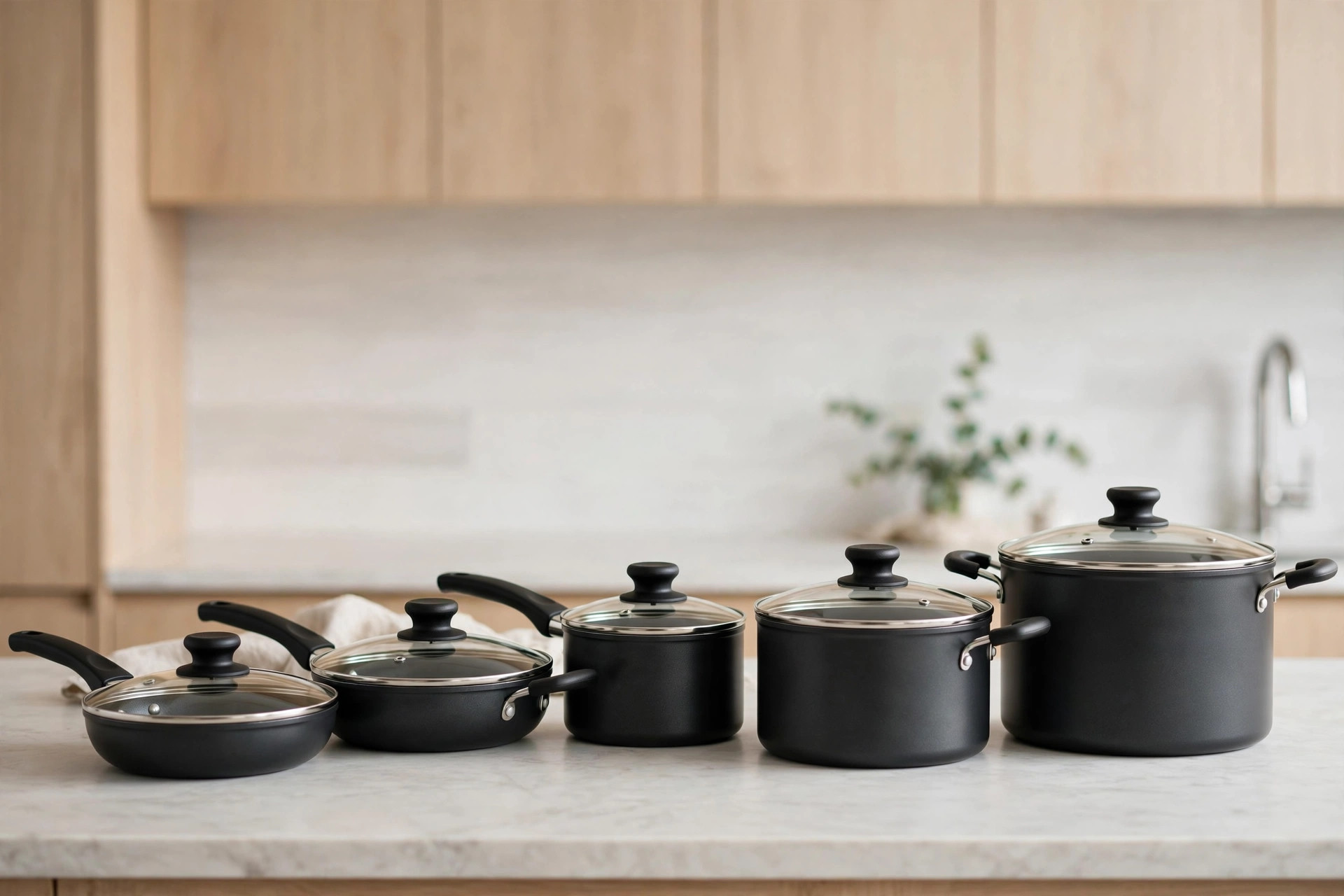
Cookware set price in Bangladesh in 2026 ranges from ৳2,500 to ৳8,000 depending on the number of pieces, coating quality and brand. For most families, a 7-piece PFOA-free non-stick set around ৳3,500–৳5,500 is the sweet spot — enough pots and pans for daily bhat, dal, bhaji and curry without paying for pieces you'll never use. In this guide we explain what "PFOA-free" actually means, compare coating types honestly, break down what's inside the popular Kiam Classic 7-piece set, and share care tips that can double your cookware's life.
What Does "PFOA-Free" Actually Mean?
PFOA (perfluorooctanoic acid) is a chemical that was historically used in manufacturing some non-stick coatings. Health concerns led the industry to phase it out, and today reputable brands label their products PFOA-free — meaning the coating was made without that chemical.
What should you take from this as a buyer in Bangladesh? Always choose PFOA-free cookware from a known brand. Unbranded, suspiciously cheap non-stick pans in local markets may use older coating processes. A genuine PFOA-free set from Kiam or similar trusted brands costs a little more but is the safe choice for something your family eats from every day.
Golden rule: if a non-stick set is dramatically cheaper than every branded alternative and makes no PFOA-free claim, walk away — your family's health isn't the place to economize.
Types of Non-Stick Coating: Honest Comparison
| Coating Type | How It Feels | Durability | Typical Price |
|---|---|---|---|
| PTFE (Teflon-style) | Classic slippery surface, great food release | 3–5 years with care | ৳2,500 – ৳6,000 |
| Ceramic | Very slick at first, eco-friendly image | 1–3 years (loses slickness faster) | ৳3,000 – ৳7,000 |
| Hard-anodized + non-stick | Heavier, extremely tough | 5+ years | ৳5,000 – ৳8,000+ |
| Marble/granite finish | Attractive speckled look, good release | 2–4 years | ৳3,500 – ৳7,000 |
For daily Bangladeshi cooking — high-heat bhaji, kosha curries, everyday dal — PTFE-based or hard-anodized coatings from a reputable brand offer the best balance of performance and lifespan. Ceramic looks appealing but tends to lose its non-stick property fastest under high-heat tadka-style cooking.
Cookware Set Price in Bangladesh 2026
| Set Size | Typical Pieces | Price Range | Best For |
|---|---|---|---|
| 5-piece | Frypan, 2 saucepans, lids | ৳2,500 – ৳4,000 | Couples, small kitchens |
| 7-piece | Frypan, korai/wok, 2–3 pots, lids | ৳3,500 – ৳5,500 | 4–5 member family (most popular) |
| 10-piece+ | Multiple pans, pots, lids, utensils | ৳5,500 – ৳8,000 | Large families, new home setup |
Inside the Kiam Classic 7-Piece Set
The Kiam Classic 7-piece non-stick cookware set is one of the best-selling sets in Bangladesh, and for good reason. A typical configuration includes:
- 24cm frypan — for dim bhaji, machh bhaja and parathas
- Deep korai/wok with lid — for mangsho kosha and mixed vegetable bhaji
- Milk pan / small saucepan — for cha, doodh and small dal portions
- Casserole with glass lid — for khichuri, tehari and curries
- Glass lids — so you can watch food without lifting and losing heat
- PFOA-free non-stick coating throughout, with comfortable heat-resistant handles
Kiam's coating is formulated for the way Bangladeshis actually cook — repeated high-heat frying and turmeric-heavy curries — and replacement pieces are easy to find locally, unlike imported sets.
What to Look For Before You Buy: Checklist
- PFOA-free label from a known brand. Non-negotiable.
- Heavy base: pick up the pan — a good one feels solid. Thick bases prevent hot spots that burn dal.
- Handle comfort and rivets: heat-resistant handles, firmly attached. You will lift full pots of curry.
- Glass lids: let you monitor cooking without releasing steam and heat.
- Stovetop compatibility: works on gas and infrared by default. If you use induction, confirm an induction-compatible base — see our infrared vs induction guide.
- Right piece count: don't pay for a 12-piece set if you'll use 5 pieces. A 7-piece set suits most families.
- Utensil safety: plan to use wooden or silicone spatulas — metal khunti scratches any non-stick surface.
Will It Work on My Stove?
Almost all non-stick cookware sets sold in Bangladesh work on gas stoves and infrared cookers with zero issues. Induction is the exception — you need a set explicitly marked induction-compatible (magnetic base). When in doubt, do the magnet test on the pan's bottom. Pairing your new set with a pressure cooker covers fast dal and meat, while a rice cooker handles perfect bhat — the classic Bangladeshi kitchen trio.
Care Tips: Make Non-Stick Last for Years
Do
- Use wooden, bamboo or silicone utensils only — never metal khunti.
- Cook on low to medium heat; non-stick doesn't need high flame and overheating damages coating.
- Let pans cool before washing — cold water on a hot pan warps it.
- Wash with a soft sponge and mild soap; dry immediately.
- Stack with a cloth or paper between pans to prevent scratches.
Don't
- Don't preheat an empty non-stick pan on high — it degrades the coating fast.
- Don't use steel wool, harsh scrubbers or abrasive cleaners.
- Don't cut food inside the pan with a knife.
- Don't put piping-hot pans directly into cold water.
When Should You Replace Non-Stick Cookware?
Replace a pan when the coating is deeply scratched, peeling or flaking, or food starts sticking despite proper use. With good care, a quality PFOA-free set lasts 3–5 years of daily Bangladeshi cooking. Minor surface marks are cosmetic; flaking is the real signal to retire a pan.
First Use: How to Prepare a New Non-Stick Set
New non-stick performs best when broken in properly. It takes five minutes:
- Wash every piece in warm soapy water with a soft sponge, rinse and dry completely.
- Rub a thin film of cooking oil over the interior with a paper towel.
- Heat on low for 1–2 minutes, then let cool and wipe out the excess oil.
- That's it — your coating is conditioned and ready for its first bhaji.
Building a Complete Kitchen on a Budget
If you're setting up a new home, here's a sensible priority order with 2026 Bangladeshi prices:
| Priority | Item | Approx. Price |
|---|---|---|
| 1 | 7-piece non-stick cookware set | ৳3,500 – ৳5,500 |
| 2 | 5L pressure cooker | ৳2,000 – ৳3,000 |
| 3 | 1.8L rice cooker | ৳1,800 – ৳3,000 |
| 4 | Infrared cooker (if no gas line) | ৳2,500 – ৳4,000 |
| 5 | Blender for moshla/bhorta | ৳2,000 – ৳4,500 |
Total for a fully functional kitchen: roughly ৳12,000–৳20,000 — and POD Shop stocks every item on this list with cash on delivery. Start with the cookware set and pressure cooker; they cover 80% of daily cooking.
Myths About Non-Stick, Busted
- "Non-stick causes cancer": modern PFOA-free coatings from reputable brands are considered safe for normal cooking by food safety authorities worldwide. The risk came from old manufacturing chemicals, now phased out.
- "You can't get a good sear on non-stick": true for hard searing — that's what your iron korai is for. Non-stick excels at eggs, fish and sticky curries.
- "Dishwasher is fine": harsh detergents and heat dull the coating faster. Two minutes of hand washing adds years of life.
- "All non-stick is the same": coating thickness, base weight and brand quality vary enormously — which is exactly why the ৳1,200 roadside pan dies in three months.
Non-Stick vs Stainless Steel vs Cast Iron
Non-stick isn't the only option. Here's how the three main cookware materials compare for Bangladeshi cooking:
| Non-Stick | Stainless Steel | Cast Iron | |
|---|---|---|---|
| Best for | Eggs, fish, sticky curries, low-oil cooking | Boiling, stocks, acidic foods (tomato, tetul) | High-heat searing, korai bhaji, rustic flavor |
| Oil needed | Very little | Moderate | Moderate (seasoned) |
| Maintenance | Gentle care needed | Almost zero | Seasoning + drying |
| Lifespan | 3–5 years | Decades | Generations |
| Price (set) | ৳2,500 – ৳8,000 | ৳4,000 – ৳10,000 | ৳1,500 – ৳4,000 |
The smart Bangladeshi kitchen has all three: non-stick for daily low-oil cooking, steel for boiling and sour dishes, and a seasoned iron korai for the bhaji that needs real heat. Start with non-stick — it covers the most everyday meals.
Best Cookware for Classic Bangladeshi Dishes
- Dim bhaji / omelette: small non-stick frypan — slides out perfectly, minimal oil.
- Machh bhaja: non-stick frypan or well-seasoned iron korai; fish sticks to thin steel.
- Mangsho kosha: deep non-stick korai or cast iron — even heat for long kosha without burning.
- Dal: saucepan or pressure cooker; steel is fine, non-stick makes cleanup trivial.
- Khichuri / tehari: heavy-base casserole with glass lid — no sticking at the bottom.
- Cha / doodh: small milk pan; non-stick prevents the dreaded burnt-milk ring.
- Pitha (chitoi, patishapta): flat non-stick tawa or traditional clay — both work beautifully.
Storing Your Set in Small Bangladeshi Kitchens
Space is tight in most Dhaka flats. Protect your investment with these habits:
- Nest with protection: place a cotton cloth, paper towel or felt protector between stacked pans.
- Hang the frypan: a single wall hook for your most-used frypan saves cabinet space and scratches.
- Lids separately: store glass lids upright in a rack or on their sides — stacked lids chip.
- Keep it dry: in humid monsoon months, ensure pans are bone-dry before stacking to prevent handle corrosion.
How to Spot a Fake Non-Stick Set
Counterfeit cookware is common in Bangladesh's cheap markets. Red flags:
- No brand, no PFOA-free claim anywhere on the box — just "non-stick" in generic print.
- Suspiciously light: a "7-piece set" that feels like toys has a paper-thin base that will warp in weeks.
- Chemical smell out of the box that doesn't fade after washing.
- Coating already uneven — blotchy or bubbly finish before first use.
- No warranty or seller accountability — sold from a footpath with no shop to return to.
Genuine sets from Kiam and other established brands come in sealed, printed packaging with clear care instructions and a service warranty. The price difference (often just ৳500–৳1,000) buys you years of safe daily use.
Quick Decision Summary
- Budget under ৳3,500: 5-piece PFOA-free set from a trusted brand.
- Family of 4–5: 7-piece set, ৳3,500–৳5,500 — the sweet spot.
- Want 5+ years: hard-anodized set, ৳5,000–৳8,000.
- High-heat bhaji lover: keep your iron korai alongside non-stick — best of both worlds.
- First set ever: Kiam Classic 7-piece — proven in Bangladeshi kitchens, parts available locally.
Where to Buy Genuine Cookware Sets in Bangladesh
Stick to trusted sellers — fake "non-stick" sets with thin, chemical-smelling coatings flood cheap markets. At POD Shop, every cookware set is genuine, PFOA-free and quality-checked, with cash on delivery nationwide. Complete your kitchen with our blenders for bhorta and moshla paste, or browse multi cookers for one-appliance versatility.
Shop Featured Products
View all →


Frequently Asked Questions
What is the cookware set price in Bangladesh in 2026?+
Cookware set price in Bangladesh in 2026 ranges from ৳2,500 for basic 5-piece sets to ৳8,000 for large 10+ piece hard-anodized sets. A popular 7-piece PFOA-free non-stick set costs ৳3,500–৳5,500.
What does PFOA-free mean in cookware?+
PFOA-free means the non-stick coating was manufactured without perfluorooctanoic acid, a chemical phased out over health concerns. Always buy PFOA-free cookware from known brands for cookware your family eats from daily.
Which non-stick coating lasts the longest?+
Hard-anodized non-stick lasts longest (5+ years), followed by quality PTFE/Teflon-style coatings (3–5 years with care). Ceramic coatings feel very slick initially but typically lose non-stick performance fastest, especially with high-heat Bangladeshi cooking.
Can I use metal utensils on non-stick cookware?+
No. Metal khunti and steel spatulas scratch non-stick coating. Use only wooden, bamboo or silicone utensils to protect the surface and extend the pan’s life.
Does non-stick cookware work on induction cookers?+
Only if it has an induction-compatible magnetic base — check the packaging or do the magnet test on the pan bottom. All non-stick sets work on gas stoves and infrared cookers.
When should I replace my non-stick pans?+
Replace when the coating is deeply scratched, peeling or flaking, or when food starts sticking despite proper care. With good maintenance, a quality set lasts 3–5 years of daily use.
Reference: Cookware and bakeware on Wikipedia